
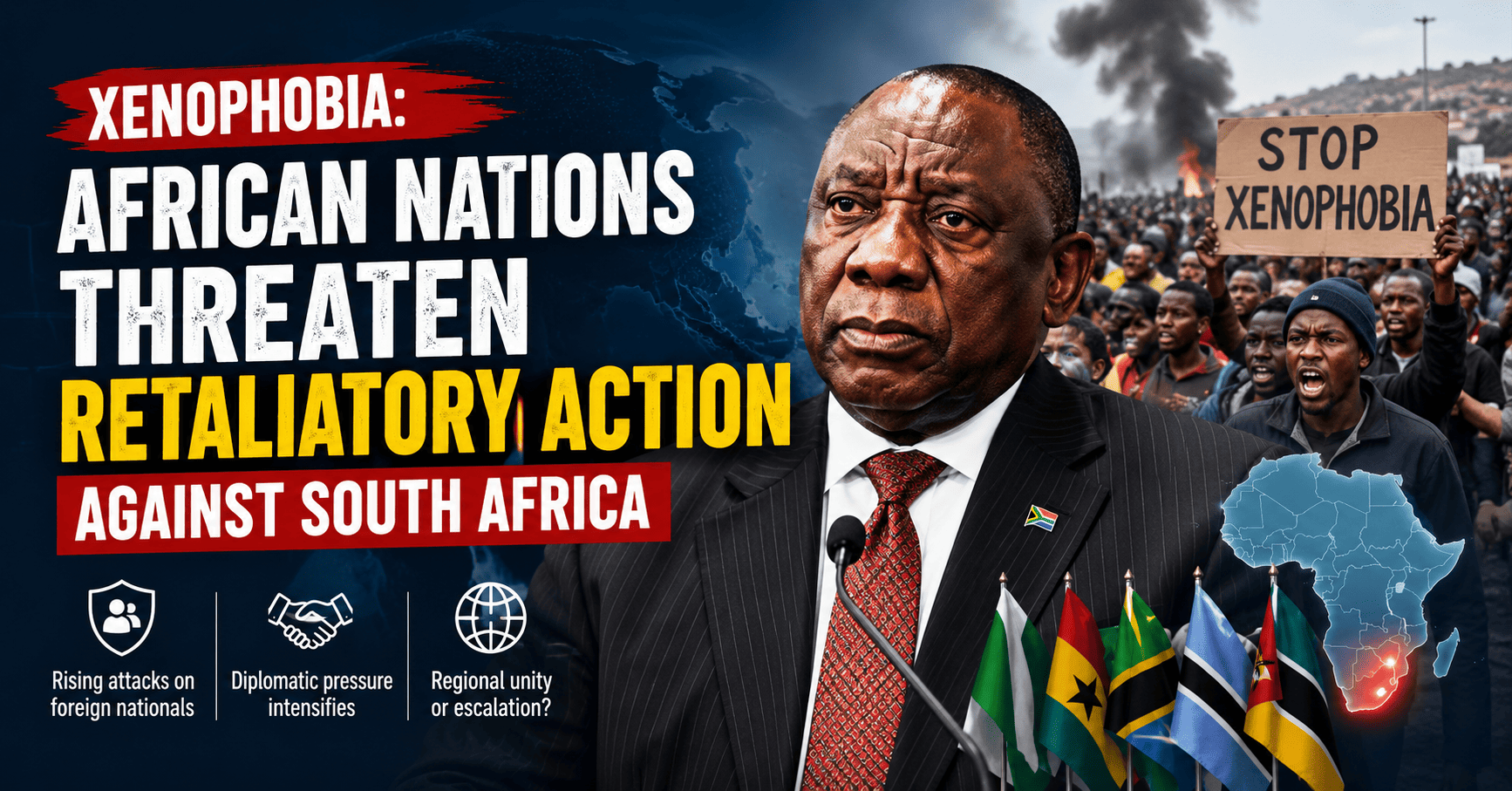
Several African nations are increasing diplomatic pressure on South Africa following renewed xenophobic attacks targeting foreign nationals, particularly Nigerians and other African migrants.
The latest unrest reportedly took place between April 27 and 29, 2026, across parts of Pretoria, Johannesburg, and other areas, where protests linked to immigration concerns escalated into attacks and intimidation against foreign residents.
According to reports, countries including Nigeria, Ghana, Tanzania, Botswana, and Mozambique have responded with varying levels of diplomatic protest, warnings, and discussions around possible retaliatory measures if the situation continues.
Nigeria has summoned South Africa’s High Commissioner and begun voluntary evacuation arrangements for affected citizens. Ghana has also formally protested after reports of harassment involving Ghanaian nationals circulated online.
Other African governments are reportedly considering stronger responses involving border controls, trade restrictions, and transportation measures.
South African authorities have condemned the attacks, with President Cyril Ramaphosa stating that no individual has the right to take the law into their own hands.
🔍 Discernment
This situation highlights how economic pressure, unemployment concerns, migration tensions, and social frustration can quickly evolve into division and hostility.
Across many nations, citizens are increasingly anxious about:
- economic survival
- job competition
- insecurity
- rising living costs
When these pressures intensify, fear and anger are often redirected toward vulnerable groups, including migrants and foreigners.
For Africa, this moment is deeply significant because it touches on:
- regional unity
- historical solidarity
- human dignity
- peaceful coexistence
The tension also serves as a reminder that unresolved economic and social pressures can destabilize relationships between nations if wisdom, justice, and dialogue are not prioritized.
📖 What Scripture Says
- Romans 12:18
“If it is possible, as far as it depends on you, live at peace with everyone.” - Leviticus 19:34
“The foreigner residing among you must be treated as your native-born. Love them as yourself…” - Matthew 5:9
“Blessed are the peacemakers, for they will be called children of God.”
These scriptures remind believers that human dignity, peace, and justice should not be abandoned during periods of social tension.
🧭 How Believers Should Respond
1. Reject Hatred and Division
Believers should resist narratives that dehumanize entire groups of people.
2. Pray for Peace and Stability
Pray for wisdom for African leaders, protection for affected communities, and peaceful resolution of tensions.
3. Remain Calm and Informed
Avoid spreading unverified videos, inflammatory statements, or fear-driven rumours online.
4. Support Dialogue and Justice
Long-term stability requires both lawful governance and compassionate leadership.
🌍 Wider Implications
If tensions escalate further, there could be:
- disruption of regional trade
- strain in diplomatic relations
- increased migration pressure
- economic consequences across Southern Africa
Analysts warn that continued instability could affect regional cooperation efforts if peaceful solutions are not pursued quickly.
🗣️ Faith Closing
Moments of tension test the strength of unity and leadership.
While nations may face pressure and disagreement, peace remains possible when wisdom, justice, and restraint guide decisions instead of anger and fear.
Fear divides. Wisdom restores. Peace strengthens nations.